
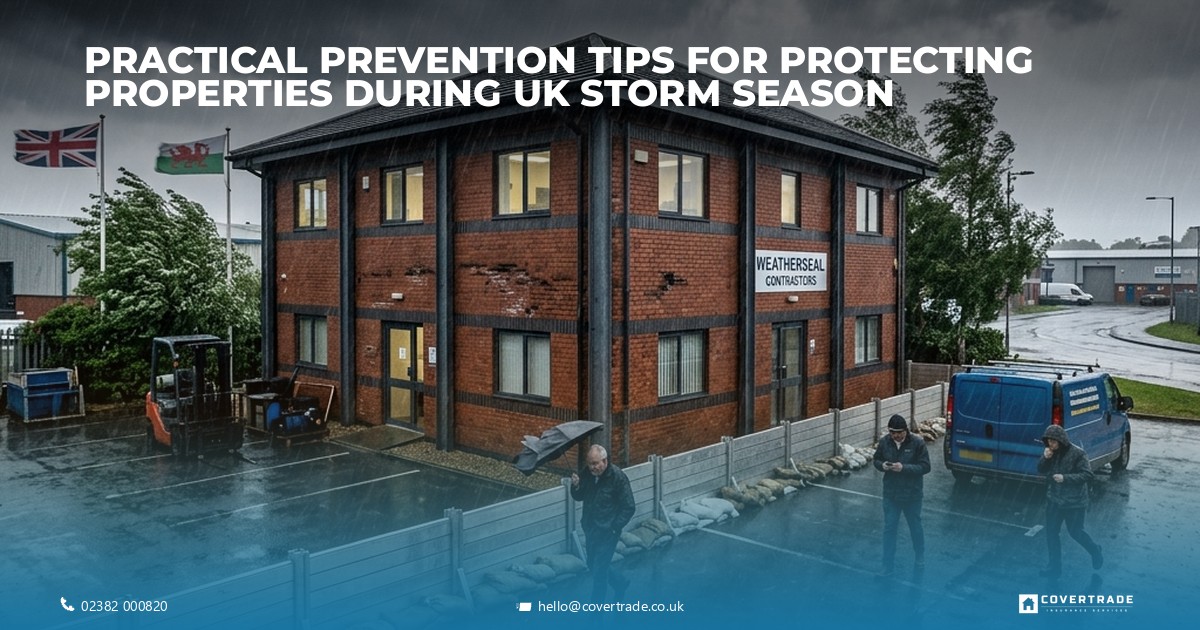
Protecting property during storm season involves proactive measures to safeguard against wind, rain, and flood damage. UK property owners should focus on structural integrity, drainage systems, and contingency planning to minimise potential storm impact. At CoverTrade Insurance Services, we advise on practical steps to protect your assets during adverse weather conditions.
Understanding the UK Storm Season
The UK storm season typically spans from October to March, with peak occurrences in the winter months. During this period, properties face increased risks of damage due to high winds, heavy rainfall, and potential flooding. Understanding the specific challenges of this season is crucial for effective preparation and risk management.
Structural Integrity and Maintenance
Ensuring the structural integrity of your property is a primary defence against storm damage. Regular maintenance checks should include inspecting roofs for loose tiles or shingles, ensuring windows and doors are secure, and checking for any structural weaknesses. Reinforcing vulnerable areas can significantly reduce the risk of damage during storms.
Roof and Window Inspections
Regular inspections of roofs and windows can identify potential vulnerabilities. Loose tiles, broken seals, or damaged frames can lead to water ingress and further damage. Addressing these issues promptly can prevent costly repairs and interruptions.
Effective Drainage Systems
Adequate drainage is essential to prevent water accumulation during heavy rains. Ensure gutters and drains are clear of debris to facilitate proper water flow. Installing additional drainage solutions, such as sump pumps or French drains, can also mitigate the risk of flooding.
Regular Gutter Cleaning
Blocked gutters can lead to water overflow and subsequent damage to property foundations. Regular cleaning and maintenance of gutters are crucial, especially before the storm season, to ensure they function effectively.
Flood Prevention Measures
For properties in flood-prone areas, additional precautions are necessary. Installing flood barriers, using water-resistant materials, and raising electrical systems above potential flood levels can help minimise damage. Property owners should also consider flood insurance as an essential component of their risk management strategy.
Implementing Flood Barriers
Flood barriers can be a practical solution to prevent water ingress. Temporary barriers can be deployed quickly in response to flood warnings, offering immediate protection for vulnerable areas of your property.
Contingency Planning and Insurance
Comprehensive contingency planning is vital for continuity. This includes having an emergency response plan, maintaining a list of essential contacts, and ensuring that key documents are backed up and accessible. Additionally, appropriate insurance cover, such as commercial combined insurance, can provide financial support in the event of damage.
Reviewing Your Insurance Cover
Review your existing insurance policies to ensure they cover storm-related risks. Policies should be tailored to your specific needs and may include business interruption cover to protect against loss of income during recovery. CoverTrade Insurance Services can assist in assessing and arranging suitable cover for your needs.