
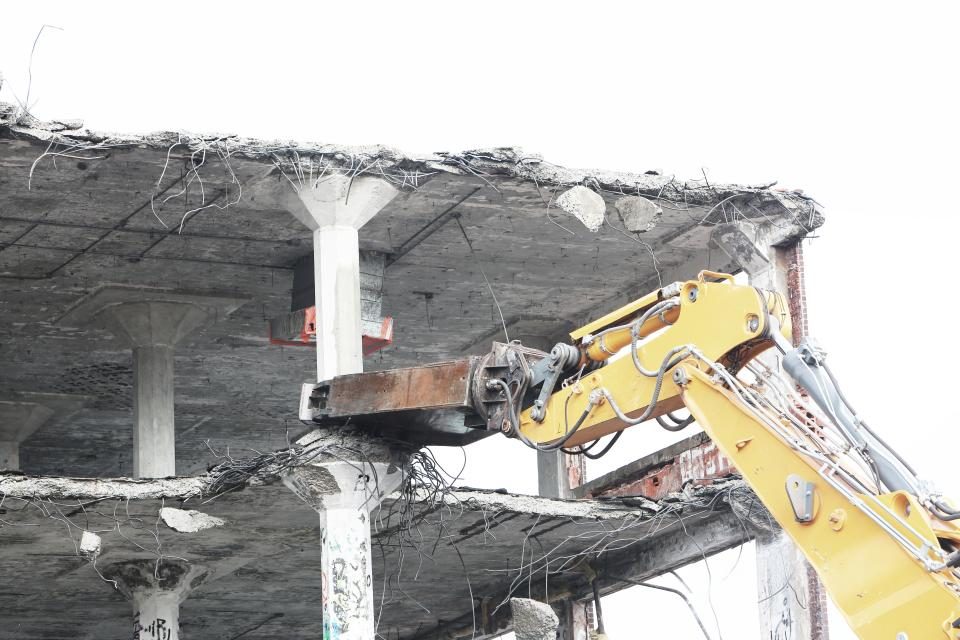
Demolition Contractors Insurance
Most liability policies are written for firms adding to a building. Demolition is the opposite, and a lot of standard contractors' wordings either exclude it or only allow it where it is minor and part of other work. A builder knocking through a wall and a firm taking down a three storey frame are not the same risk, and the policy has to say which one you are.
Why Demolition Needs Its Own Wording
It is the first thing we check. A demolition contractor insured on a general builders' wording can find the policy does not respond on the one job where it matters.
How Much Is Demolition Insurance?
Demolition is priced on how you work rather than on the trade name. A soft strip firm working inside empty buildings sits at a very different level from a contractor taking down frames next to occupied property. Method, maximum height, how close you work to adjoining buildings and your claims record are what move it.
We are a broker, so we take it to several insurers rather than quoting one. Call 02382 000820 for a quote.
What Demolition Insurance Covers
Demolition Public Liability Insurance
Injury and damage to property that is not yours, written for demolition rather than borrowed from a builders' policy. The limit, the methods allowed and the maximum height are all stated on it, and they need to match what you actually do.
Employers' Liability Insurance
Required by law and included in every package we place. Demolition is rated heavily here because falls, collapse and falling material injure the people doing the work first.
Vibration And Removal Of Support
Damage to the building next door from vibration, or from taking away the structure that was propping it up. Commonly excluded or restricted on standard wordings, and on a terraced or party wall job it is the claim you are most likely to face.
Own And Hired-in Plant
High reach machines, excavators with attachments, breakers and crushers. Hire terms usually make you responsible for the machine and for the hire charges that keep running while it is off being repaired.
Asbestos Liability
Accidental disturbance of asbestos you did not know was there. Planned licensed removal is a separate class of work, and most demolition policies are clear that they do not cover it unless it is declared and arranged.
The Building Next Door Is The Real Exposure
On an open site the risk is mostly to your own people. On a terrace, a party wall or a town centre plot, it is the neighbour. Vibration cracks their render, removing a wall takes away support they were relying on, and dust and debris land on cars, roofs and shopfronts.
Vibration and removal or weakening of support are among the most common exclusions on contractors' liability wordings, and where they can be bought back it usually comes with conditions: a pre start condition survey of adjoining property, monitoring on larger jobs, and a method statement that shows how the structure stays stable while it comes down. The survey is the one that matters most. Without photographs of the cracks that were already there, every crack is yours.
Method, Height And What Is Declared
Insurers rate demolition on how it is done. Soft strip and hand demolition sit at one end, machine demolition with a high reach at the other, and explosives are usually excluded entirely unless arranged separately. The maximum height you work to is normally written into the policy as a hard line rather than a loading.
Hot cutting brings a fire condition with it, usually a permit system and a watch after the work finishes. Taking on a job above your declared height or with a method the policy does not mention is the most common way a demolition policy fails at claim stage, so it is worth telling us before you price the job rather than after you win it.
Asbestos, And The Survey Before You Start
A refurbishment and demolition asbestos survey is required before the work begins, and it is the document an insurer asks for first after anything goes wrong. Accidental disturbance of material the survey missed is one risk. Knowingly working with asbestos is another, and it needs a licence and a policy written for it.
If you sit somewhere between the two, removing some non licensed material as part of a strip out for instance, say so on the proposal. That middle ground is where cover is most often assumed and least often in place.
Demolition Firms Turned Away Elsewhere
A lot of demolition contractors come to us after an online system has declined them, or after their renewal has been quietly moved to a wording that excludes the work they actually do. Neither is unusual, because the number of insurers that will write demolition properly is small.
What helps is the detail. Method statements, the qualifications your operatives hold, how you survey adjoining property, and what happened behind any claim on the record. We put that in front of the underwriter so they are pricing your business rather than the trade as a whole.
If you have been declined, or your renewal has jumped, call 02382 000820 before you accept anything.
What We Need To Quote
- Turnover, and how it splits between soft strip, hand and machine demolition
- The maximum height you work to, and the tallest structure you have taken down
- Whether you work next to occupied or adjoining buildings
- Any hot cutting, and how you manage fire after it
- Whether you handle asbestos, and if so under what licence
- Plant you own and plant you hire in, with the most expensive machine
- Five years of claims, including any damage to neighbouring property
Cover that often goes with this
The gaps we most often find sitting next to this policy.
- Scaffolders insuranceThe other trade rated on height, and usually on the same site.
- Groundworks insuranceClearing the site leads straight into digging it, with buried services the main risk.
- Contractors all riskCover for the job itself while it is in progress, before it is handed over.
- Motor fleet insuranceOnce you run more than a couple of vans, one policy and one renewal date.
Common questions
How much is demolition insurance?+
It depends mostly on how you work. A soft strip firm working inside buildings and a contractor taking down frames next to occupied property are rated very differently. Method, maximum height, adjoining buildings and your claims history drive most of it. Call 02382 000820 for a quote.
Does a builders policy cover demolition?+
Usually only where it is minor and incidental to building work, such as knocking through an internal wall. Many builders' and general contractors' wordings exclude demolition beyond that, or cap the height. If demolition is a real part of what you do, it needs to be declared and written for, otherwise the policy may not respond to the claim you are most likely to have.
Am I covered for damage to the building next door?+
Not automatically. Damage caused by vibration, or by removing or weakening support, is commonly excluded or restricted on contractors' liability policies. It can often be bought back, usually with conditions such as a pre start condition survey of the adjoining property. On terraced or party wall jobs it is worth confirming before you start.
Is asbestos covered on a demolition policy?+
Accidental disturbance of asbestos you did not know about can be covered, subject to the wording. Licensed asbestos removal is a separate activity and is generally excluded unless specifically arranged. Insurers will expect a refurbishment and demolition survey to have been carried out before work started.
What public liability limit do demolition contractors need?+
Most main contractors and clients ask for at least £5m, and £10m is common on larger commercial and public sector work. Read the contract, because raising a limit mid term is straightforward and finding out after a claim that it was too low is not.
Other trades we cover
What our customers say on Google
5.0average from 169 Google reviews