
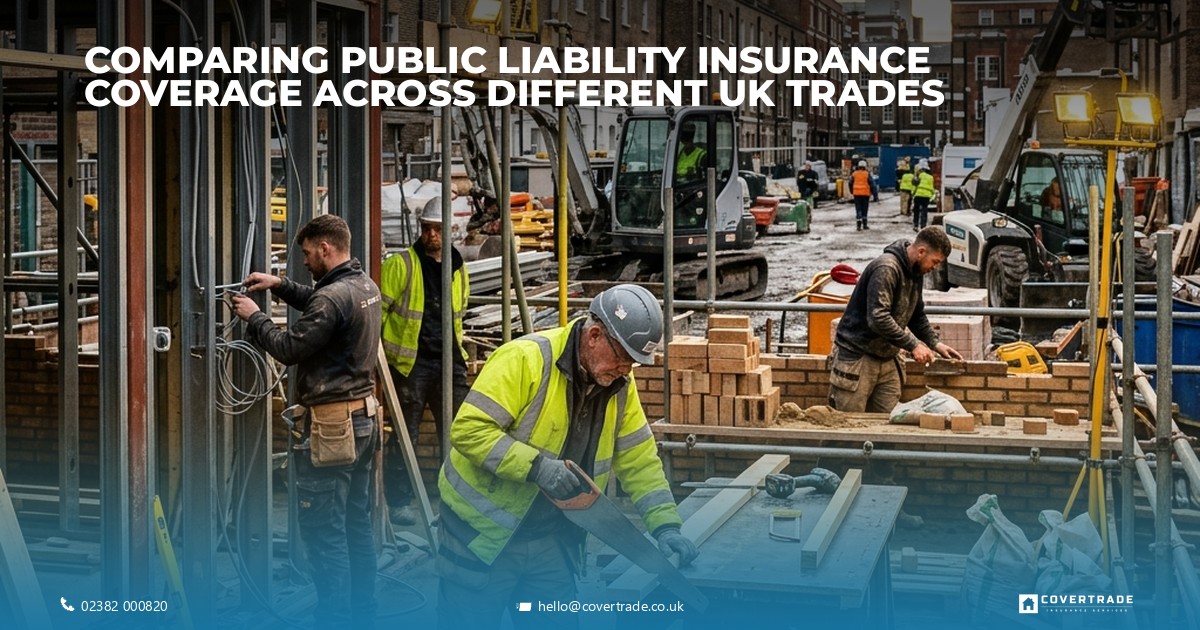
Public liability insurance coverage is essential for UK tradespeople, but the specifics can vary significantly depending on the trade. For example, a roofer might need coverage for working at heights, while a plumber might focus more on water damage risks. Understanding these differences helps in selecting a policy that fits your trade's unique needs.
Understanding Public Liability Insurance for UK Trades
Public liability insurance provides financial protection against claims made by third parties for injury or property damage arising from a business's operations. For tradespeople, this means safeguarding against incidents that could occur on-site, such as accidents involving clients or damage to a client's property.
Key Differences in Coverage Across Trades
The nature of work undertaken by different trades means that the risks and, consequently, the insurance coverage required can vary. Here are some common differences:
Height and Heat Work for Roofers
Roofers face unique risks due to working at heights and the potential use of heat work. As outlined in our roofers insurance page, policies often include specific clauses for these activities, which can affect premiums. A comprehensive understanding of these risks is crucial, especially since roofers may encounter claims related to falling objects or fire damage.
Water Damage and Liability for Plumbers
Plumbers must consider coverage for potential water damage resulting from leaks or burst pipes. The plumbers insurance we arrange typically addresses these concerns, including coverage for accidental damage during installations or repairs.
Public Interaction and Risk for Retail Trades
Trades like shopfitters and decorators, who frequently interact with the public, require robust liability coverage. Our shopfitters insurance policies often include protection against claims from customers injured on-site or due to the work performed.
Factors Influencing Public Liability Insurance Premiums
Premiums for public liability insurance can vary based on several factors:
- Turnover and Wageroll: Higher turnover and wageroll can increase premiums as they often indicate a larger scale of operations and higher risk exposure.
- Claims History: A history of claims can lead to higher premiums, reflecting the perceived risk of future claims.
- Trade-Specific Risks: Unique risks associated with specific trades, such as height work for roofers, can also influence premiums.
Practical Examples of Public Liability Insurance in Action
Consider a scenario where a plumber accidentally causes water damage to a client's property. The public liability policy would cover the cost of repairs, mitigating financial loss. Similarly, if a roofer's equipment accidentally damages a parked car, the policy would help cover the repair costs.